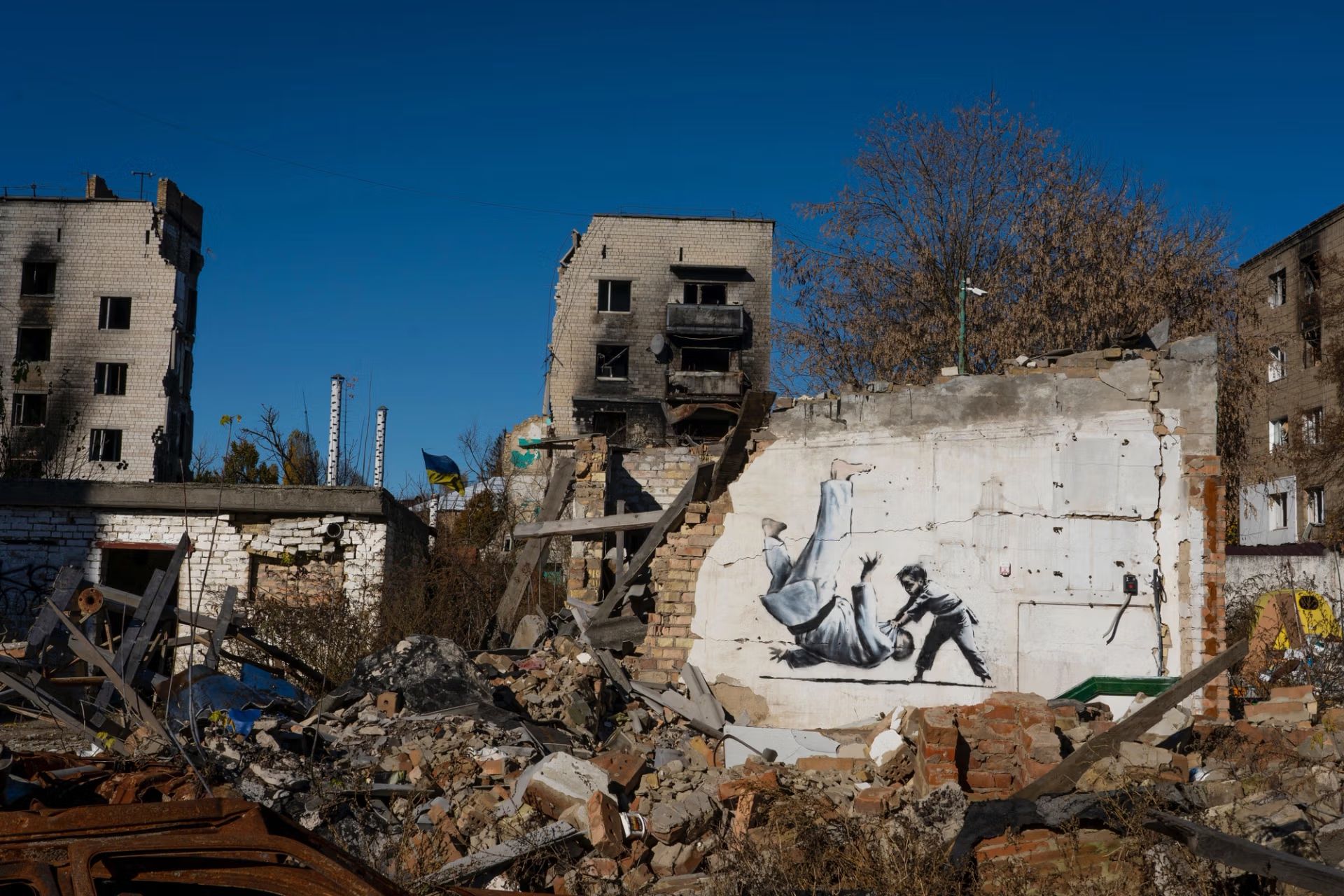
This collection of reflections from students explores a profound and timely question: Is art necessary during a war?. While the immediate focus of a nation under siege is often survival and victory, these voices argue that art is not a luxury, but a vital tool for resilience and resistance. The contributors highlight how creative expression—from poetry written in shelters to films capturing the feeling of catastrophe—serves as a “humanizing” force that prevents a nation from being reduced to mere statistics.
They identify art as a unique form of communication that can convey the complexities of the Ukrainian psyche to a global audience in ways news reports cannot. Furthermore, art provides a necessary psychological respite, offering moments of peace, beauty, and emotional release for those exhausted by the weight of war. Ultimately, these students suggest that art is essential because it insists on the existence of the soul, preserving cultural identity and the very humanity that is being defended.
Valeriia Bohdan:
When I was unfamiliar with the reality of war, I thought that during such hardships people cared only about survival and victory. However, when the full-scale invasion began, I felt hopeless, yet I continued to read books.
A year and a half later, I moved to Kyiv and discovered that many people enjoy going to museums and theatres. At first, I did not understand the popularity of these activities, but then I decided to try them myself. I realized that art can bring a sense of peace, even if only for a short time. Watching a play felt like a miracle or like stepping into another life.
Today, we can see that theatres have gained even more recognition among ordinary people. I believe that art is crucial even during war, because it allows us to feel, reflect, and remain human.
Mariia Nazarenko:
In my opinion, we need art more than ever before while the war is going on. Art in all its forms is not just an invaluable way of self-expression, but a powerful tool capable of delivering a message to the public. Art created during the war times reflects the psyche, struggles and the daily lives of those experiencing war, preserves the experience and can be used to convey it to those unfamiliar with war in general or with the situation in Ukraine in particular. Drawings, songs, poetry and prose can be used both for people to find momentary respite, and for outsiders to get closer to understanding the realities of Ukrainian people.
Kriukova Oleksandra:
The full-scale invasion in Ukraine has raised many difficult questions, one of which is whether art is necessary during such times. In the context of war, art became a strong way to communicate, document and resist. It also helps both Ukrainians and the international community grasp the reality of the country beyond military events.
One of the most important roles of art during war is its ability to express and share experiences on a global scale. News media often focuses on violence, destruction and statistics, which, although important, can reduce the country to a single narrative of suffering. Art, on the other hand, presents a more complex and human image of Ukraine. Through creative expression, artists reveal that the nation is alive, diverse, and culturally rich. Additionally, it illustrates how war impacts various facets of daily life that are rarely discussed in public, like shifts in social interactions, such as how people continue to celebrate, meet friends and look for moments of normality despite danger. It also discusses changes in education, such as studying online or in shelters due to displacement or under air raid sirens. Crucially, art gives voice to marginalized groups, such as LGBTQ+ individuals or women serving in the military or supporting the war effort, it expands our understanding of who protects the nation and what Ukrainian society actually looks like by depicting these experiences.
During the war in Ukraine, art reveals how people live, adjust, and keep going as a nation. Art is essential today not despite the war, but because of it.
Eva Lapatyuk:
Art is supposed to give people an opportunity to relive the experiences and emotions the artist has put in their work. While at war, we must focus on helping our country in any way we can, but art is not something we have to turn our backs on. It is a tool we can use to show the world what we are going through. It can help to raise not only awareness, but also deep empathy and a sense of connection to our problems. Besides, art can be used in therapy or simply to help people express their worries. It benefits us in many ways we must acknowledge.
Daria Shvidka:
Do We Need Art in Times of War?
Yes. Now more than ever.
When bombs fall and words fail, art speaks. It carries what silence cannot hold — grief, rage, hope, defiance. It transforms suffering into something that outlasts it.
Art is how we leave a mark. Not just on walls or canvases, but on time itself. Long after the guns go quiet, it is the paintings, the poems, the songs that tell the world: we were here, we felt this, we did not disappear.
War tries to erase. Art insists on existing.
Every sketch drawn in a shelter, every melody hummed in the dark, every word written under fire — these are not escapes from reality. They are reality. They are proof of a soul that refuses to be reduced to a statistic, a ruin, a footnote.
Art does not stop war. But it survives it. And in surviving, it carries the names, the faces, the stories of those who lived through it — or didn’t.
So yes. We need art today. Not despite the war — because of it.
Because to create is to say: I was here. And I mattered.
Diana Kylunchenko:
Under pernicious circumstances of war, people might become exhausted and lose their sparks, enthusiasm, and eagerness to propel life, achieve something. That is why everyone is seeking their own relief. Of course, do not diminish the importance of standing up against enemies. Art is one of the ways that brings pleasure and contentment, but at the same time it is also relevant to reveal your own thoughts in objects on paper, interpreting emotions you have undergone. Thus, it is a way of expression. It is a way to represent sorrow, grief, and regret, or the feeling of release. And suddenly a person breathes more freely, for a few minutes forgetting about a lot of obstacles and burdens. We cannot say art is inappropriate; it has the right to be.
Zhenia:
Pablo Picasso mentioned that “Painting is not made to decorate apartments. It is an instrument of war”, and that thesis cannot be more relevant than nowadays. Analysing wars and conflicts all around the world for last centuries, we cannot help but mention that enemies are bringing not only their troops, but their ideology and arts, which is a projection of the imperialistic beliefs. They use it to control not only bodies, but souls, to impose their insane narratives under the sauce of culture and arts. Because they know, that destroying the mentality and distortion of the feeling of beauty will bring them victory faster than they could blink.
Inna Pohrebniak:
For Ukrainians living through the full-scale invasion since 2022, art has become far more than entertainment. Nowadays it is a way to endure, to understand, and to remain human. In wartime, one of the most necessary things is to find a way, however briefly, to remember that life is more than its darkest moments.
For me, music is the most immediate escape. The moment I put my headphones on, something shifts: the weight of fear and exhaustion loosens, and I am carried into a quieter, more peaceful space. Music does not deny reality, but it reminds me that beauty still exists.
Cinema offers a deeper immersion. Films allow me to step into other lives and stories, creating a temporary distance from the constant presence of war.
Yet literature carries the greatest weight. Books are not only comfort but also education. Through them, Ukrainians rediscover suppressed voices, reconnect with their culture, and better understand the identity they are defending.
In conclusion, art cannot stop a war, but it sustains resilience. It helps Ukrainians stay strong, aware, and connected to what truly matters.
Vlada Hotovtseva:
For me, art is a synthesis of aesthetic pleasure and an idea or philosophical concept. It must be both thought-provoking and appealing – not necessarily traditionally beautiful, but something you would want to return to again and again.
Art is also something that distinguishes us, humans, from other living creatures. It has always been and will always remain important, because it is one more way of expressing our thoughts and feelings. I would even call it another type of communication – one that goes beyond words.
Besides sharing ideas, art can have a powerful positive influence on our mental state. This is especially important nowadays, during the war in our country. When society becomes mentally exhausted, it loses its resilience. In such times, art can support people, bring moments of happiness, relief, and emotional release. It helps us process difficult experiences and reminds us that we are still capable of feeling, creating, and hoping.
Mariia Sydorenko:
Today, art is far more than just breathtaking pictures or pleasant music. For Ukrainians, it has become a powerful tool for survival and resistance. In my opinion, art is absolutely essential for the country, that fights for freedom. Freedom of speech and thoughts.
Art serves as one of the most successful methods for drawing global attention to the critical issues a nation faces. It communicates our harsh reality in a way that regular news reports often cannot. Furthermore, in times of deep tragedy, art has a unique ability to unite us. Whether through a moving song or a striking mural, it brings people together emotionally. It helps us share the same aim: protecting our cultural identity and fighting for a peaceful future.
M.:
It can seem that art is pointless during wartime. As a language and literature student I constantly feel like it would be better for me to do something more useful, like engineering, architecture, or medicine. However, people in my field don’t fail to remind me that we are human. And humans make art. And art must be studied too.
Art is the best way to express what our people are going through. For example, the film „U Are the Universe“ may not be about war, but it captures feelings of catastrophe, isolation, and trying to live a routine life despite everything, which are common among Ukrainians.
Additionally, the art of the military people, such as the poetry of Artur Dron, is a voice that the world necessarily needs to hear.
Zlata Honcharova:
In my opinion, war doesn’t need to consume our every being. Talking about art even if it’s not connected to our struggles, is a good practice. Art, as a form of expression of one’s humanity, can help with exploring and dealing with complex emotions either by creating something yourself or engaging with someone else’s work.
But even if not for the ways art can help you personally, talking about art during the war is important because art can and is political. When it’s not expressing the emotions, it expresses the thinking processes, the biases, and the worldview of the author or the public reacting to the work of art. And the topic of war is obviously not excluded from such discussions.
So yes, talks of art are important, and there is no need to not engage with them.
Dina Horetska:
_“We don’t read and write poetry because it’s cute. We read and write poetry because we are members of the human race. And the human race is filled with passion. And medicine, law, business, engineering, these are noble pursuits and necessary to sustain life. But poetry, beauty, romance, love, these are what we stay alive for”.
— John Keating (Robin Williams), Dead Poets Society
In these unpredictable, unpleasant times, we still need art, maybe more than ever.
Art is the form of love. Without it, it would be much harder to endure difficulties and believe in a better future. It allows us to express pain, remember what matters, and support each other even when words are not enough. In some ways, it’s a form of therapy. Nowadays, we have lots of poetry which is written by military men. It’s deeply connected with their experience but with ours too. As well as it’s also great from the point of art. Another function of art during the war is to show foreigners that we are still alive. Furthermore, we are much more than war in our country. We have our high level writers, artists, directors. And always had. It’s the most reasonable way to tell our stories to the world. To make us be heard. To show who we are.
Maria Serebryanska:
Art today, whether music, cinema, poetry, or fine art, has taken on a deeper, almost vital meaning for Ukrainians. In the reality of a full-scale invasion, it is no longer just a form of entertainment or self-expression; it has become a space of emotional survival.
Confronted daily with distressing news, destruction, and uncertainty – often amplified by constant exposure through digital media – individuals face an overwhelming emotional burden. In such circumstances, art provides a crucial refuge. It constructs an alternative, imaginative realm in which one can momentarily withdraw from the harshness of reality. Within this space, beauty, harmony, and meaning persist, offering a counterbalance to fear and anxiety.
Without access to this symbolic sanctuary, coping with the traumatic information would be significantly more difficult. Human mental health cannot rely solely on endurance. It necessitates restoration, and reflection. Art fulfills these needs by enabling individuals to process complex feelings, and sustain hope. It allows people not only to endure but also to preserve their humanity.
Moreover, art helps preserve identity and culture. In difficult times, it becomes a way to hold on to what defines a nation and its people. It tells stories, captures emotions, and keeps the spirit alive.
So, do we, Ukrainians, need art today? More than ever. Without it, the weight of reality would be much heavier to carry. Art is not an escape from life – it is a way to continue living through it.
Katerina Yankovska:
War takes lives but it also slowly destroys people who are still alive. When a person focuses only on fear, loss, and constant anxiety, they begin to feel empty inside before the war ends. And when it finally does, many people don’t know how to live after everything because for a long time, they only knew how to survive.
This constant focus on horror has a price. People become emotionally exhausted, their health gets worse, and stress builds up. Over time, this stress can turn into anger. Relationships break, families fall apart, and it’s not because people don’t love each other, but because they are too tired and hurt inside.
That is why art is not something unimportant during war. It is necessary. Art helps people breathe. It reminds us that we are still human and can feel something more than just pain. It gives us hope, calm.
Watching a film while cooking dinner, listening to music, or going to the theatre when it’s possible—these are not wrong things to do. There are ways to survive. Living your life is not a betrayal. It is a form of resistance.
Art doesn’t take us away from reality; it helps us stay alive in it.
Sofia Pishchanska:
Art is one of the ways for humans to express their feelings, and my favorite way.
Sometimes people would rather not think rationally, listen to debates, participate in discussions, etc. People can be tired of it, bored, or someone is just too lazy to find out what is going on in this world. But I am not trying to say that you do not need to be interested in hard political things; of course, you should. But if you are an artist, you express these political issues differently, through art. Artists touch humans’ souls and feelings. They know which emotions to press to make you pay attention to the problem. It can be a big poster or painting, a song, an emotional dance, social video, etc. An emotional reaction is usually first; only after that do you rationalize it. To be honest, it is very responsible to understand how to make people pay attention through emotions. For example, the Korean band BTS has a song, “Spring Day,” that is dedicated to the Sewol ferry disaster. Let’s look at our country. Now we have a lot of important messages that artists are promoting. For example, the band MUR. Their first album is related to the Shot Renaissance. The art also can be supportive. For example, now a lot of people love theater and sometimes cannot even buy a ticket on time because of the popularity of our culture. The art does not allow us to forget a lot of important issues, disasters, pain.
Also, always remind us about good and supportive things.
Anna Nazarenko:
In a time of ongoing war, art is often dismissed as a secondary concern, yet it remains more vital than ever because it captures the profound evolution of a society under pressure. Art is not just about aesthetics; it is a powerful medium that documents change and development, reflecting how a nation’s soul adapts to its darkest hours. This is clearly visible in Kyiv today, where a vibrant scene of exhibitions and art weeks continues to thrive despite the conflict. By integrating themes of war into creative works, such as photography exhibitions that juxtapose the grace of art with the raw damage of violence, artists provide a necessary perspective that news reports cannot capture. This format is essential because it forces us to see the tangible impact of the war, serving as a constant, visual reminder that the struggle is still ongoing. Rather than a distraction, art becomes a bridge between the reality of destruction and the persistence of human growth, ensuring that we remain sensitive to the world around us.